
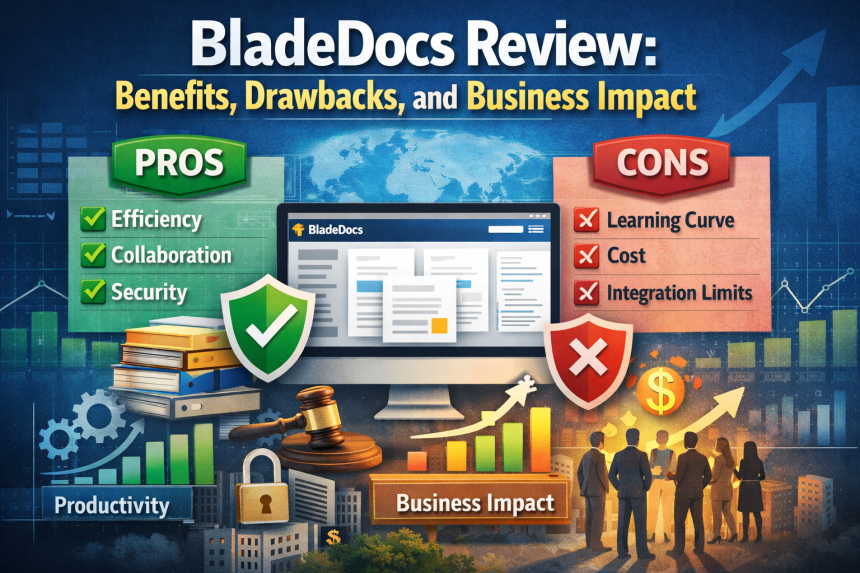
BladeDocs is a cloud-based document management system (DMS) developed for businesses of all sizes. It focuses on centralizing documents, enhancing collaboration, and securing sensitive information. By integrating workflow automation, real-time collaboration, and customizable templates, BladeDocs aims to reduce administrative burdens while increasing operational efficiency.
- Key Features of BladeDocs
- 1. Document Storage and Organization
- 2. Workflow Automation
- 3. Collaboration Tools
- 4. Security and Compliance
- 5. Reporting and Analytics
- 6. Integration with Other Tools
- Benefits of BladeDocs
- 1. Increased Efficiency
- 2. Cost Savings
- 3. Enhanced Collaboration
- 4. Improved Security
- 5. Scalability
- 6. Regulatory Compliance
- 7. Better Decision-Making
- Drawbacks of BladeDocs
- 1. Learning Curve
- 2. Cost Considerations
- 3. Integration Limitations
- 4. Internet Dependence
- 5. Customization Complexity
- Business Impact of BladeDocs
- 1. Operational Efficiency
- 2. Risk Management
- 3. Employee Satisfaction
- 4. Customer Experience
- 5. Cost Efficiency
- 6. Competitive Advantage
- BladeDocs vs. Competitors
- Pricing Overview
- Implementation Tips for Businesses
- Frequently Asked Questions
- Conclusion
The platform targets multiple industries, including finance, healthcare, legal, and technology. Its versatility allows businesses to store, organize, and retrieve documents efficiently, reducing time wasted on manual document handling.
Key Features of BladeDocs
Understanding BladeDocs begins with analyzing its core features. These functionalities set it apart from generic file storage systems.
More Read: Expert Self Silo Review: Productivity Methods, Strategies, and Value
1. Document Storage and Organization
BladeDocs allows businesses to store vast quantities of documents in a structured digital library. Users can categorize files by client, department, or project, ensuring quick access. Advanced search filters further simplify document retrieval, even in extensive repositories.
2. Workflow Automation
Manual processes slow down operations. BladeDocs incorporates workflow automation to streamline approvals, reviews, and notifications. Automated workflows reduce errors, ensure compliance, and free employees to focus on strategic tasks.
3. Collaboration Tools
Collaboration remains crucial in modern business. BladeDocs enables real-time editing, commenting, and version tracking. Team members can work simultaneously without confusion over outdated files. Integration with common communication tools strengthens team productivity.
4. Security and Compliance
BladeDocs prioritizes data security with encryption, access controls, and audit trails. Businesses handling sensitive data, such as legal or financial documents, benefit from these safeguards. Compliance features help organizations adhere to regulations, minimizing risks of data breaches or penalties.
5. Reporting and Analytics
BladeDocs offers reporting dashboards that provide insights into document usage, workflow efficiency, and team performance. Analytics help identify bottlenecks, optimize processes, and make informed decisions.
6. Integration with Other Tools
BladeDocs supports integration with popular business applications, including CRM systems, cloud storage platforms, and productivity tools. Seamless integration reduces the need for manual data transfer and ensures continuity across business processes.
Benefits of BladeDocs
BladeDocs brings multiple advantages to businesses aiming to optimize document management.
1. Increased Efficiency
Automation of routine tasks reduces manual effort. Employees spend less time searching for documents or chasing approvals. Workflows move faster, and projects reach completion sooner.
2. Cost Savings
Efficient document management decreases administrative overhead. Businesses reduce spending on physical storage, printing, and redundant tasks. Over time, BladeDocs can generate measurable cost savings.
3. Enhanced Collaboration
Teams gain a centralized platform for document sharing and editing. Collaboration occurs in real time, reducing delays caused by version conflicts or miscommunication.
4. Improved Security
Encryption and access controls protect sensitive documents. Audit logs provide visibility into who accessed or modified files. Security reduces exposure to data breaches and regulatory fines.
5. Scalability
BladeDocs accommodates business growth. Its cloud-based infrastructure allows organizations to add users, increase storage, and expand workflows without disrupting operations.
6. Regulatory Compliance
Industries such as healthcare, finance, and legal require strict compliance. BladeDocs simplifies adherence to regulations like HIPAA or GDPR, helping organizations avoid penalties while maintaining customer trust.
7. Better Decision-Making
Analytics and reporting tools provide actionable insights. Managers track document usage, workflow efficiency, and team performance. Data-driven decisions improve operational effectiveness and resource allocation.
Drawbacks of BladeDocs
No platform comes without limitations. BladeDocs presents some challenges businesses must consider.
1. Learning Curve
Implementing BladeDocs requires training. Teams unfamiliar with digital DMS may need time to adjust, slowing initial adoption.
2. Cost Considerations
Subscription fees may appear high for small businesses or startups. However, long-term ROI often offsets initial expenses. Organizations must evaluate cost against productivity gains.
3. Integration Limitations
While BladeDocs integrates with major tools, certain niche software may lack compatibility. Businesses relying on specialized applications may encounter connectivity issues.
4. Internet Dependence
BladeDocs relies on cloud access. Network outages or slow internet may temporarily hinder productivity. Organizations must ensure reliable connectivity.
5. Customization Complexity
Although BladeDocs offers customizable templates and workflows, setting them up can require technical knowledge. Organizations may need support to achieve optimal configurations.
Business Impact of BladeDocs
BladeDocs influences multiple aspects of business operations, from productivity to risk management. Understanding its impact helps organizations measure value before adoption.
1. Operational Efficiency
Centralized document storage and automated workflows reduce task redundancy. Teams complete tasks faster and focus on strategic initiatives. Productivity improvements ripple across departments, boosting overall performance.
2. Risk Management
BladeDocs enhances document security and compliance, reducing risks related to data breaches and regulatory violations. Businesses gain peace of mind knowing sensitive information remains protected.
3. Employee Satisfaction
Employees benefit from simplified workflows and collaboration tools. Reduced frustration from misplaced documents or approval delays improves workplace satisfaction.
4. Customer Experience
Efficient document management translates into faster client responses and smoother project delivery. Businesses build trust through reliable service and accurate information handling.
5. Cost Efficiency
Automation and digital storage lower operational costs. BladeDocs reduces reliance on physical filing systems, printing, and repetitive administrative work. Savings can be reinvested in growth initiatives.
6. Competitive Advantage
Businesses leveraging BladeDocs gain operational agility. Faster decision-making, improved collaboration, and secure document handling provide a competitive edge in fast-paced markets.
BladeDocs vs. Competitors
When evaluating BladeDocs, businesses often compare it with competitors like DocuWare, M-Files, and SharePoint. BladeDocs stands out for its combination of user-friendly interface, workflow automation, and security features.
- DocuWare: Strong in compliance features but may require complex setup.
- M-Files: Offers metadata-driven organization but higher pricing tiers.
- SharePoint: Widely used but often criticized for complicated navigation.
BladeDocs balances ease of use with robust functionality, appealing to organizations seeking productivity without sacrificing security.
Pricing Overview
BladeDocs offers tiered subscription plans based on storage, user count, and advanced features. While exact pricing varies, most plans include:
- Core document management
- Workflow automation
- Collaboration tools
- Security features
- Basic analytics
Businesses should assess plan options relative to their operational needs, team size, and budget constraints.
Implementation Tips for Businesses
Adopting BladeDocs successfully requires strategic planning. Consider these tips:
- Define Objectives: Identify key workflows and document processes that benefit most from BladeDocs.
- Train Teams: Allocate time for training sessions to ensure smooth adoption.
- Start Small: Begin with a pilot department before rolling out organization-wide.
- Integrate Gradually: Connect BladeDocs with essential tools first to minimize disruption.
- Monitor Performance: Track workflow improvements, usage rates, and ROI regularly.
Frequently Asked Questions
What is BladeDocs?
BladeDocs is a cloud-based document management system that centralizes document storage, automates workflows, and improves team collaboration for businesses.
What are the main benefits of BladeDocs?
Key benefits include increased efficiency, enhanced collaboration, strong security, regulatory compliance, cost savings, and scalable operations.
What are the main drawbacks of BladeDocs?
Drawbacks include a learning curve for new users, subscription costs, reliance on internet connectivity, limited integration with niche software, and setup complexity for custom workflows.
How does BladeDocs impact business operations?
BladeDocs streamlines workflows, reduces administrative tasks, enhances document security, improves team productivity, and supports faster, data-driven decision-making.
Can BladeDocs integrate with other business tools?
Yes, BladeDocs integrates with major productivity, CRM, and cloud storage tools, although certain specialized software may face compatibility challenges.
Is BladeDocs suitable for small businesses?
BladeDocs works for small and large businesses, but smaller organizations should assess subscription costs versus expected productivity gains.
How does BladeDocs help with compliance and security?
BladeDocs uses encryption, access controls, and audit trails to protect sensitive documents and supports regulatory compliance for industries like healthcare, finance, and legal.
Conclusion
BladeDocs delivers a powerful document management solution that enhances business efficiency, collaboration, and security. While initial costs and learning curves may challenge some organizations, the long-term benefits outweigh the drawbacks.
Businesses investing in BladeDocs can expect streamlined workflows, cost savings, and improved operational performance. For companies seeking reliable document management, BladeDocs represents a practical, scalable, and secure platform capable of transforming how teams handle information.