
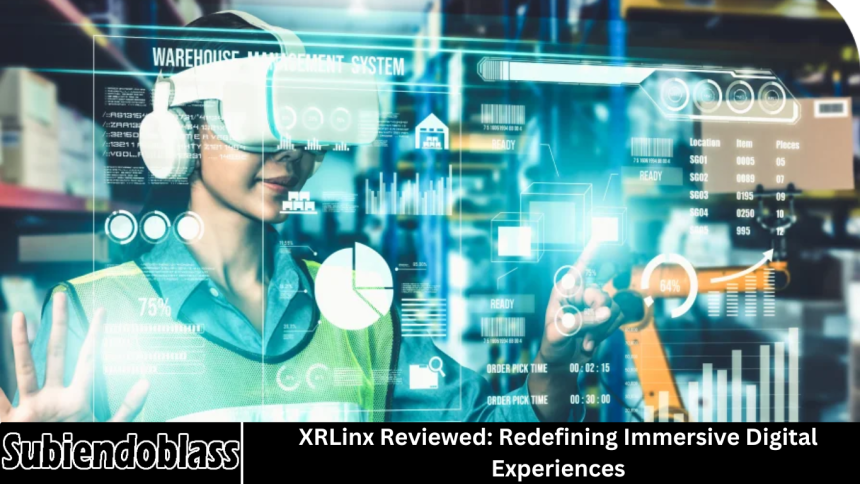
Digital transformation continues shaping how people interact with technology, brands, and virtual environments. Immersive platforms now play a crucial role across various industries, including entertainment, education, marketing, real estate, healthcare, and enterprise collaboration.
- Understanding XRLinx and Its Vision
- Core Features That Define XRLinx
- Unified XR Ecosystem
- Cross-Platform Compatibility
- Real-Time Interaction Engine
- Advanced Visual Rendering
- No-Code and Low-Code Tools
- How XRLinx Transforms Digital Experiences
- Industry Applications of XRLinx
- Education and Training
- Healthcare and Medical Simulation
- Real Estate and Architecture
- Retail and E-Commerce
- Marketing and Brand Engagement
- Technical Performance and Scalability
- User Experience and Accessibility
- SEO and Digital Presence Advantages
- Competitive Position in the XR Market
- Future Potential and Innovation Roadmap
- Benefits for Businesses and Creators
- Challenges and Considerations
- Frequently Asked Question
- Conclusion
Among emerging solutions, XRLinx stands out as a powerful ecosystem designed to redefine immersive digital experiences through extended reality innovation, seamless integration, and user-focused design.
This in-depth review explores XRLinx features, benefits, real-world applications, performance capabilities, and future potential, offering a complete understanding for businesses, creators, and technology enthusiasts seeking next-generation digital engagement.
Understanding XRLinx and Its Vision
XRLinx represents a convergence of extended reality technologies, blending augmented reality, virtual reality, and mixed reality into a unified platform. Instead of treating immersive tools as isolated experiences, XRLinx focuses on connectivity, allowing digital environments to interact with real-world systems, data streams, and users in real time.
The platform aims to eliminate the complexity often associated with XR adoption. Traditional immersive solutions require expensive hardware, advanced development skills, and fragmented workflows. XRLinx simplifies access while maintaining high-quality visual fidelity and interactive depth.
By prioritizing scalability, flexibility, and accessibility, XRLinx supports organizations seeking immersive transformation without excessive technical barriers.
More Read: Review Highlights: Exploring Kibe Loco’s Satirical Style
Core Features That Define XRLinx
Unified XR Ecosystem
XRLinx operates as a centralized hub for immersive content. Users manage experiences across multiple devices, platforms, and environments from a single system. This unified approach reduces development time while improving consistency across digital touchpoints.
Cross-Platform Compatibility
Compatibility remains essential in modern digital strategies. XRLinx supports desktops, mobile devices, XR headsets, and web-based environments. This ensures immersive experiences reach wider audiences without forcing hardware limitations.
Real-Time Interaction Engine
The platform includes a real-time interaction engine enabling dynamic user engagement. Environments respond instantly to user actions, data inputs, and environmental variables, creating an authentic immersive presence.
Advanced Visual Rendering
High-performance rendering enhances realism, depth, and responsiveness. XRLinx leverages optimized graphics pipelines, supporting complex scenes while maintaining smooth performance across devices.
No-Code and Low-Code Tools
Creators benefit from intuitive tools that reduce reliance on extensive coding. Visual editors, drag-and-drop assets, and modular components allow rapid development while maintaining creative freedom.
How XRLinx Transforms Digital Experiences
Enhanced User Engagement
Immersive interaction increases attention, emotional connection, and memory retention. XRLinx transforms passive viewing into participatory experiences, allowing users to explore environments, manipulate objects, and interact naturally.
Data-Driven Immersion
XRLinx integrates live data sources into immersive environments. Analytics dashboards, IoT feeds, simulations, and business intelligence systems become interactive spaces rather than static displays.
Personalized Experiences
Personalization remains essential for modern engagement. XRLinx adapts environments based on user behavior, preferences, location, and real-time input, ensuring relevance and immersion.
Seamless Collaboration
Virtual collaboration spaces allow teams to meet, design, train, and analyze within shared immersive environments. Remote participants experience presence comparable to physical interaction.
Industry Applications of XRLinx
Education and Training
Educational institutions leverage XRLinx for experiential learning. Virtual labs, historical recreations, technical simulations, and skill-based training environments improve comprehension and retention.
Corporate training programs benefit from risk-free simulations. Employees practice procedures, safety protocols, and decision-making scenarios without real-world consequences.
Healthcare and Medical Simulation
Medical professionals utilize immersive environments for anatomy visualization, surgical rehearsal, and patient education. XRLinx supports accurate modeling and interactive learning essential for healthcare innovation.
Therapy and rehabilitation programs also benefit from immersive engagement, improving patient motivation and progress tracking.
Real Estate and Architecture
Property visualization reaches new levels through XRLinx. Virtual walkthroughs, interactive floor plans, and design previews allow buyers and investors to explore spaces remotely with realistic scale and detail.
Architects and designers collaborate inside virtual models, reducing revisions and improving spatial understanding.
Retail and E-Commerce
Immersive retail environments transform online shopping. Customers explore virtual stores, interact with products, and visualize items within real-world contexts.
XRLinx enables branded experiences that increase engagement, reduce returns, and enhance customer confidence.
Marketing and Brand Engagement
Marketing campaigns gain impact through immersive storytelling. Interactive product launches, virtual events, and experiential brand narratives create emotional connections beyond traditional advertising.
Brands leverage XRLinx to deliver memorable experiences that drive loyalty and social sharing.
Technical Performance and Scalability
Cloud-Based Infrastructure
XRLinx relies on a scalable cloud architecture, ensuring performance consistency across user loads. Organizations deploy experiences globally without worrying about infrastructure limitations.
Security and Data Protection
Security remains critical in immersive systems handling sensitive data. XRLinx implements encryption, access controls, and compliance frameworks to protect user information and enterprise assets.
API and System Integration
The platform integrates easily with existing enterprise systems, CRM platforms, analytics tools, and content management solutions. APIs allow customization without disrupting workflows.
User Experience and Accessibility
Intuitive Interface Design
User interfaces focus on clarity and ease of use. Navigation feels natural, reducing onboarding time for new users and creators.
Accessibility Features
XRLinx incorporates accessibility considerations, including adjustable interfaces, voice interaction, and compatibility with assistive technologies. Inclusive design expands reach and usability.
Performance Optimization
Adaptive streaming and rendering optimization ensure smooth experiences even on lower-end devices, maintaining immersion without compromising quality.
SEO and Digital Presence Advantages
Immersive Content Discoverability
XRLinx experiences integrate with web platforms, allowing immersive content to enhance digital presence without replacing traditional SEO strategies.
Engagement Metrics Improvement
Interactive experiences increase dwell time, interaction rates, and conversion potential, supporting stronger digital performance indicators.
Content Differentiation
Immersive environments differentiate brands within competitive markets, offering unique experiences that traditional content formats cannot match.
Competitive Position in the XR Market
XRLinx competes effectively against fragmented XR solutions by offering an integrated ecosystem rather than isolated tools. Its balance between advanced capability and accessibility positions it well for both enterprise adoption and creative experimentation.
Compared to competitors requiring specialized hardware or technical expertise, XRLinx emphasizes flexibility, reducing friction for widespread adoption.
Future Potential and Innovation Roadmap
The XR industry continues evolving rapidly. XRLinx positions itself for future growth through ongoing development in areas such as artificial intelligence integration, spatial computing, and digital twin technology.
Planned enhancements include improved AI-driven personalization, expanded device compatibility, and deeper analytics capabilities. These developments strengthen long-term value for users and organizations.
Benefits for Businesses and Creators
- Increased engagement and retention
- Reduced development complexity
- Scalable deployment across industries
- Enhanced collaboration and communication
- Strong competitive differentiation
XRLinx empowers creators to focus on experience design rather than technical constraints while enabling businesses to adopt immersive strategies efficiently.
Challenges and Considerations
While XRLinx lowers entry barriers, immersive adoption still requires strategic planning. Content design, user onboarding, and performance testing remain important factors for success.
Organizations should align immersive initiatives with clear goals, metrics, and audience needs to maximize return on investment.
Frequently Asked Question
What is XRLinx?
XRLinx is an immersive digital experience platform that combines augmented, virtual, and mixed reality into a single connected ecosystem.
How does XRLinx improve digital engagement?
XRLinx enables interactive, real-time experiences that increase user participation, attention, and retention.
Which industries benefit from XRLinx?
Education, healthcare, real estate, retail, marketing, and enterprise collaboration commonly use XRLinx solutions.
Does XRLinx require advanced technical skills?
XRLinx offers low-code and no-code tools, allowing creators to build immersive experiences without deep programming knowledge.
Is XRLinx compatible with multiple devices?
XRLinx supports mobile devices, desktops, web platforms, and XR headsets for broad accessibility.
How does XRLinx support scalability?
Cloud-based infrastructure allows XRLinx experiences to scale globally while maintaining performance and reliability.
What makes XRLinx different from other XR platforms?
XRLinx focuses on unified integration, ease of use, and real-time interaction rather than isolated immersive tools.
Conclusion
XRLinx represents a significant step forward in immersive digital experience design. By unifying extended reality technologies into an accessible, scalable, and performance-driven platform, it opens new possibilities across education, healthcare, marketing, retail, and enterprise collaboration.
As digital interaction continues shifting toward immersive engagement, platforms like XRLinx play a vital role in shaping how people connect with information, environments, and each other.