
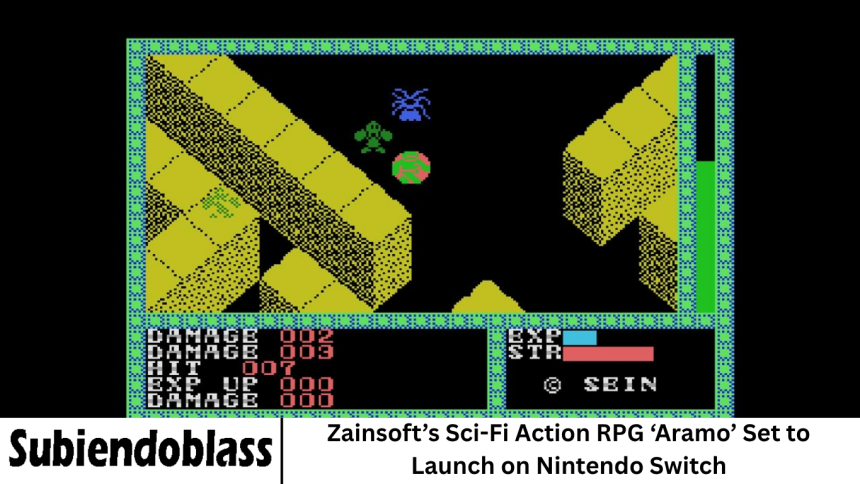
Retro gaming fans have a new reason to celebrate as Zainsoft’s classic sci-fi action RPG Aramo is officially making its way to the Nintendo Switch. This iconic 1986 title, originally released for the MSX computer platform, is returning for a new generation through D4 Enterprise’s EGGCONSOLE series.
- The Return of a Forgotten Classic
- A Glimpse into the Story of Aramo
- Gameplay: A Blend of Exploration and Challenge
- The Switch Version: Faithful to the Original
- Why This Release Matters
- Tips for New Players
- The Visual and Audio Experience
- How the Re-Release Benefits Retro Gaming Fans
- What Makes Aramo Stand Out
- The Legacy of Zainsoft
- What to Expect Going Forward
- Frequently Asked Question
- Conclusion
The re-release allows players to experience the mysterious and challenging world of Aramo on modern hardware, preserving a piece of gaming history that was once difficult to find. In this article, we’ll take a deep dive into the background of Aramo.
Its gameplay, what makes it special, and what players can expect from the Nintendo Switch version. Whether you’re a retro enthusiast or a curious newcomer, here’s everything you need to know about this classic sci-fi adventure.
More Read: How to Unlock the Latest Skins in Free Fire
The Return of a Forgotten Classic
Back in the mid-1980s, the MSX home computer was a popular platform in Japan and parts of Europe, known for hosting a wide variety of creative games. Among them was Aramo, a sci-fi themed action RPG created by Zainsoft.
Despite being an intriguing and experimental title for its time, it remained relatively unknown outside Japan. Now, nearly four decades later, Aramo is being reintroduced to players worldwide through the Nintendo Switch.
This is part of D4 Enterprise’s ongoing efforts to preserve and re-release classic games from the MSX and other retro systems under their EGGCONSOLE brand. The release brings a rare opportunity for fans of old-school gaming to experience a title that blends action, exploration, and science fiction in a unique way.
A Glimpse into the Story of Aramo
Aramo tells the story of an astronaut stranded on a mysterious planet once inhabited by an advanced civilization. The planet, once thriving with technology and life, now lies in ruins. Players take control of the lone explorer who must navigate through ancient structures.
Solve environmental puzzles, and survive against mechanical guardians and hostile conditions. The story unfolds primarily through exploration and discovery rather than dialogue or cutscenes, a common storytelling method for 1980s computer games.
The eerie silence and atmospheric setting create a feeling of isolation that enhances the sense of mystery. This minimalist approach to storytelling allows players to interpret the world and its secrets in their own way, making the journey more immersive and personal.
Gameplay: A Blend of Exploration and Challenge
Unlike many action RPGs of its era, Aramo uses a unique quarter-view perspective. The game’s environments are constructed from cube-like blocks, giving players a sense of depth and height that was uncommon in 1986. You’ll explore labyrinthine structures filled with traps, obstacles, and enemies, where every movement must be calculated.
Key Gameplay Elements
Exploration:
The heart of Aramo lies in exploring the unknown. Players must navigate multi-layered levels, finding paths to progress while managing limited resources.
Puzzle Solving:
Many of the challenges require figuring out how to reach certain areas, activate mechanisms, or avoid environmental hazards.
Combat:
While combat is not the main focus, players will encounter mechanical enemies that require precise movement and timing to defeat.
Resource Management:
Items and energy are limited, so planning your actions is critical to survival. This creates a tense but rewarding gameplay loop.
Atmosphere:
The game’s ambient sound effects and simple but effective visuals create a moody, sci-fi environment that encourages exploration.
Despite its age, the game’s design offers a sense of mystery and discovery that modern players may find refreshing. It’s not about speed or flashy graphics—it’s about patience, curiosity, and persistence.
The Switch Version: Faithful to the Original
The Nintendo Switch release of Aramo is part of D4 Enterprise’s EGGCONSOLE series, which specializes in bringing classic games to modern platforms. Rather than a full remake or remaster, this release stays true to the original MSX version.
It is essentially an emulated version that maintains the authentic look and feel of the 1986 game. This means players will experience the original visuals, music, and mechanics. However, the Switch version may include modern conveniences such as save states and configurable controls to make the game more accessible.
The game is available digitally through the Nintendo eShop at an affordable price, making it easy for retro fans and newcomers alike to try it out.
Why This Release Matters
For many, Aramo is more than just a game—it’s a piece of gaming history. The MSX platform played a crucial role in the development of many famous game designers and series, including early works from Konami and other Japanese studios.
Re-releasing Aramo on the Nintendo Switch ensures that this slice of history is not lost to time.
Here are a few reasons why this release is important:
Preservation of Gaming History:
Many MSX titles have become hard to find or play legally. The Switch re-release ensures that Aramo remains accessible to future generations.
Cultural Value:
It showcases the creativity and experimentation of Japanese developers in the early days of computer gaming.
Educational Insight:
Modern developers and gamers can learn from older game design philosophies that focused on player discovery and challenge rather than guidance.
Affordable Access:
The EGGCONSOLE series makes classic games available at budget-friendly prices, encouraging exploration of retro titles.
This release also helps younger audiences understand how early developers experimented with storytelling and level design long before modern technology made things easier.
Tips for New Players
If you’re planning to dive into Aramo for the first time, it’s worth keeping a few things in mind. Like many old-school games, it doesn’t hold your hand, and part of the fun is figuring things out through trial and error.
Here are some tips to help you get started:
Take It Slow:
The controls and movement may feel clunky at first, but practice will help you get used to the perspective and pacing.
Map Your Progress:
Some players find it helpful to sketch out simple maps of the levels to avoid getting lost.
Save Frequently:
If the Switch version allows save states, use them wisely before tough sections or battles.
Observe Carefully:
The environment often provides clues to hidden paths or items.
Manage Resources:
Be mindful of limited items—use them only when absolutely necessary.
Enjoy the Mystery:
The game doesn’t explain everything, so let yourself explore and interpret what you find.
Be Patient:
This is a game meant to be savored slowly, not rushed.
By following these tips, you’ll find that Aramo offers a rewarding experience, especially for players who appreciate old-school design and exploration-based gameplay.
The Visual and Audio Experience
Visually, Aramo is unmistakably an MSX-era game, with simple pixel graphics and a distinctive color palette. Yet, its creative use of perspective and geometric design makes it stand out among its peers. The environments are designed to give a sense of scale and structure that was ambitious for its time.
The soundtrack is minimalistic, using the MSX’s limited sound hardware to create an atmospheric soundscape. The music and effects work together to convey the loneliness of being trapped on an abandoned planet.
On the Switch, this retro charm remains intact, giving players a nostalgic yet captivating experience.
How the Re-Release Benefits Retro Gaming Fans
The ongoing trend of re-releasing retro games is a boon for the gaming community. Titles like Aramo allow players to see how genres like action and RPGs evolved over time. They also help ensure that influential but lesser-known games are not forgotten.
For collectors and enthusiasts, having Aramo on the Nintendo Switch is a chance to legally own and enjoy a rare title without needing old hardware. It’s also an opportunity for younger players to experience how early game designers approached storytelling and mechanics.
Moreover, such releases strengthen the connection between modern gaming and its roots. They show how the foundations of today’s popular games were laid by developers who worked with limited technology but unlimited imagination.
What Makes Aramo Stand Out
While many MSX games experimented with fantasy or space themes, Aramo managed to combine elements of both science fiction and exploration into something unique. Its mysterious tone, challenging navigation, and haunting setting make it stand out even among other retro titles.
Here are a few aspects that make Aramo special:
Unique Level Design:
The block-based, quarter-view world design was quite innovative for 1986, giving players a sense of 3D space on 2D hardware.
Atmospheric Storytelling:
Rather than relying on text or dialogue, the game creates mood through environment and sound.
Sense of Isolation:
The player’s loneliness on the abandoned planet adds emotional depth to the gameplay.
Creative Challenge:
It demands logical thinking, patience, and exploration—qualities often missing from modern, fast-paced games.
Historical Significance:
Aramo represents a transitional phase between early arcade-style games and the deeper RPG experiences that would come later.
The Legacy of Zainsoft
Zainsoft, the original developer of Aramo, was part of a wave of small Japanese studios creating innovative titles for the MSX platform. While not as widely known as giants like Konami or Hudson Soft, Zainsoft’s contribution with Aramo demonstrated.
The depth of creativity among independent developers during the 1980s. Their work reflected the passion and experimentation that defined the early computer gaming era—an age when even small studios could produce titles that left a lasting impression on players.
The Switch re-release brings well-deserved recognition to this lesser-known developer and their pioneering ideas.
What to Expect Going Forward
The success of Aramo on Nintendo Switch could pave the way for more retro releases from the MSX catalog. D4 Enterprise’s EGGCONSOLE series has already revived several classic titles, and interest in nostalgic gaming continues to grow among players worldwide.
As more people discover and appreciate these re-released gems, publishers may be encouraged to continue expanding their retro libraries. For fans of classic Japanese computer games, this is a promising sign of more treasures to come.
Frequently Asked Question
When is Aramo releasing on Nintendo Switch?
Aramo is officially available on the Nintendo Switch through the eShop as part of the EGGCONSOLE series in 2025.
Who developed the original game?
The original Aramo was developed by Zainsoft in 1986 for the MSX home computer.
Is the Switch version a remake or the original game?
The Switch release is a faithful emulation of the original MSX game, preserving its original graphics, sound, and gameplay.
Will it have any new features?
The EGGCONSOLE release may include small quality-of-life updates such as save states or screen options, but it remains largely unchanged.
How much does it cost?
The game is available digitally at an affordable price, typically around $6 to $7 on the Nintendo eShop.
Is Aramo beginner-friendly?
It can be challenging for modern players due to its old-school design and lack of guidance, but patience and exploration make it rewarding.
Why should I play Aramo today?
If you enjoy classic exploration-based games or want to experience a piece of gaming history, Aramo offers a unique and atmospheric adventure that stands the test of time.
Conclusion
Zainsoft’s Aramo is a window into a different era of gaming—one where imagination filled in the gaps left by limited technology. Its return on Nintendo Switch is both a celebration and preservation of gaming’s early creativity.
While it may not have the cinematic visuals or fast-paced gameplay of modern titles, it offers something just as valuable: a journey into the past and a reminder of how far the industry has come.