
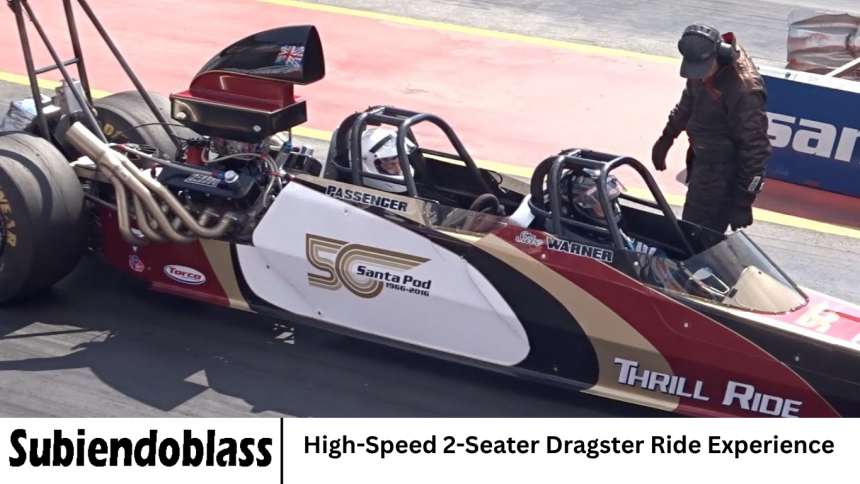
If you’ve ever dreamed of being in a real drag race, where engines roar, tires burn, and your body feels the unstoppable pull of acceleration — the High-Speed 2-Seater Dragster Ride Experience is your ultimate ticket to adrenaline heaven.
- What is a 2-Seater Dragster Ride Experience?
- The Science Behind the Speed
- What to Expect on the Day
- Safety Standards and Equipment
- Who Can Participate?
- The History of Drag Racing and the Rise of Passenger Rides
- What It Feels Like: The Passenger’s Perspective
- How to Book the Experience
- Tips to Make the Most of Your Dragster Experience
- Why This Experience is Unforgettable
- Environmental and Technological Advances
- Beyond the Ride: Become a Racer Yourself
- Frequently Asked Question
- Conclusion
In this one-of-a-kind motorsport adventure, you’ll suit up, strap into a professional-grade dragster next to an experienced racer, and blast down a quarter-mile track in seconds — hitting speeds that rival some of the world’s fastest cars.
This article takes a deep dive into everything about the 2-Seater Dragster Experience — from what to expect, how it works, the safety standards, and how it compares to other high-speed adventures. We’ll also explore the history of drag racing, what makes these machines so powerful.
More Read: All GTA: San Andreas Cheat Codes – Complete List of Vehicles, Weapons, and Stat Boosts
What is a 2-Seater Dragster Ride Experience?
A 2-Seater Dragster Ride is a professional motorsport experience that lets you ride in a real dragster — a purpose-built race car designed to achieve maximum acceleration over a short distance, typically a quarter-mile (0.25 miles or 402 meters).
The “2-seater” setup allows an experienced drag racer to sit in the driver’s seat, while you — the passenger — ride in a securely fitted cockpit seat directly behind them. Once everything is set, the dragster rockets off the starting line, reaching speeds of up to 140–160 mph (225–260 km/h) in under 8 seconds.
It’s not just a ride; it’s an encounter with physics itself. You’ll feel G-forces that push your body back into the seat, vibrations from the engine reverberating through your chest, and the sheer awe of acceleration that leaves even seasoned car lovers speechless.
The Science Behind the Speed
Dragsters are built with one goal: to go as fast as possible in the shortest time imaginable. To achieve that, every component — from the tires to the engine to the aerodynamics — is designed for peak performance.
Here’s a breakdown of what makes these machines so incredible:
Engine Power
Most dragsters use supercharged V8 engines that produce anywhere between 800 to 1,200 horsepower for two-seater rides. For comparison, a Bugatti Chiron produces around 1,500 hp — but the dragster is far lighter and optimized purely for speed in a straight line.
Lightweight Frame
Made from chromoly steel and carbon fiber, dragsters weigh less than 1,000 kg (2,200 lbs). Every unnecessary gram is removed to ensure blistering acceleration.
Aerodynamics
The long, narrow body helps minimize drag and maximize stability. Giant rear slick tires provide traction, while the small front wheels help cut through air resistance.
Acceleration
In professional drag racing, top fuel dragsters can hit 0–100 mph in under 1 second. Two-seater dragsters, built for passengers, are tamer — but still achieve 0–100 mph in about 3 seconds. That’s faster than almost any street-legal supercar.
This mix of engineering precision and sheer force is what turns a simple quarter-mile run into a life-changing moment.
What to Expect on the Day
The High-Speed 2-Seater Dragster Experience typically unfolds at a professional raceway or drag strip, guided by licensed and experienced drivers. Here’s a step-by-step breakdown of what you can expect:
Registration and Safety Briefing
Upon arrival, you’ll sign a waiver, verify your booking, and meet the instructors. You’ll receive a detailed safety briefing explaining the car’s operation, track procedures, and signals.
Suiting Up
You’ll get fitted with a racing suit, helmet, and neck brace — all designed to meet motorsport safety standards. Depending on the provider, you might also wear fire-resistant gloves and boots.
Orientation
Before stepping into the dragster, the crew will show you how to properly enter the cockpit, secure your harness, and use the intercom (to communicate with the driver).
The Ride
Once seated and strapped in, the driver fires up the engine — a deep rumble that vibrates through your bones. As the lights on the drag strip count down, the driver slams the accelerator. You’ll feel instant acceleration as the car rockets forward, covering a quarter-mile in seconds.
The entire run lasts less than 10 seconds, but the rush stays with you long after the ride ends.
Post-Ride Celebration
After your run, you’ll usually get a chance to take photos beside the dragster, talk with the driver, and receive a certificate of completion — proof that you’ve conquered one of the fastest rides on earth.
Safety Standards and Equipment
High-speed experiences like this might sound extreme, but safety is the top priority. Professional operators follow strict NHRA (National Hot Rod Association) and motorsport safety standards.
Here’s how your safety is ensured:
- Certified Equipment: Helmets, suits, and harnesses meet fire and impact safety ratings.
- Trained Drivers: Only professional, licensed drag racers operate the vehicles.
- Track Inspections: Tracks are cleared, inspected, and fitted with emergency barriers.
- Medical Staff: On-site paramedics are present for every session.
- Controlled Environment: No public traffic — just a closed, secure raceway.
Passengers must usually meet basic health requirements (no heart issues, back problems, or pregnancy) and sign a medical declaration form before the experience.
Who Can Participate?
Most dragster experience providers have simple eligibility requirements:
- Age: Usually 16 years and older (some allow 14+ with guardian consent).
- Height/Weight Limits: Generally between 4’10” – 6’6” and under 250 lbs (113 kg).
- Health: Participants should be in good health, without conditions affected by high G-forces.
- Waiver: A legal waiver must be signed acknowledging the risks involved.
Even if you’re new to motorsports, you don’t need prior racing experience. The professional driver handles everything; you just sit back, hold tight, and enjoy the thrill.
The History of Drag Racing and the Rise of Passenger Rides
Origins of Drag Racing
Drag racing began in Southern California during the 1940s, as car enthusiasts tested their vehicles on empty runways and desert roads. What started as casual competition evolved into a regulated motorsport governed by the NHRA.
Evolution of the Dragster
By the 1960s, dragsters became purpose-built machines — long, low, and aerodynamically shaped. Speeds doubled, and safety technology improved dramatically.
Passenger Experiences
In recent decades, professional drag racing teams began offering 2-seater rides to let fans safely experience the sport’s intensity. These dragsters are slightly detuned for safety but still deliver insane speed. They’re now offered at major tracks across the U.S., U.K., and Australia.
What It Feels Like: The Passenger’s Perspective
Imagine sitting in a rocket with wheels. The driver revs the engine — the sound is deafening but exhilarating. You grip the handles tightly. The lights on the “Christmas tree” (the drag racing start lights) flash green.
Then it happens. Your entire body is slammed back into the seat as the car catapults forward. The world blurs — the track, the crowd, everything — until you cross the finish line in what feels like the blink of an eye.
As you slow down, your brain catches up with what just happened. Adrenaline floods your body. Your heart pounds. You realize you’ve just felt acceleration like few humans ever experience — the raw, unfiltered force of a dragster.
How to Book the Experience
Booking a High-Speed 2-Seater Dragster Ride is simple. Many professional tracks and racing schools offer it as a part of their event packages.
Steps to Book:
- Choose a Provider: Look for certified racing schools or NHRA-affiliated tracks.
- Select Location: Popular venues include Las Vegas Motor Speedway, Santa Pod Raceway (UK), and Willowbank Raceway (Australia).
- Pick a Date: Experiences are often seasonal, running during fair weather months.
- Purchase Tickets: Prices range between $150 – $400 USD, depending on duration and location.
- Prepare for the Day: Wear comfortable clothing and arrive early for safety orientation.
Gift vouchers are also popular — perfect for birthdays, anniversaries, or bucket-list gifts for car lovers.
Tips to Make the Most of Your Dragster Experience
- Hydrate well before your ride.
- Avoid heavy meals or caffeine before the run.
- Listen carefully during the safety briefing — it’s crucial for your comfort and safety.
- Secure loose items like jewelry or phones before entering the cockpit.
- Ask questions! The drivers love sharing their expertise.
- Capture the memory: Most providers offer video recordings of your run.
- Relax and enjoy the moment — it’s over fast, but unforgettable.
Why This Experience is Unforgettable
Few adventures deliver such a pure, physical sense of speed. It’s not about distance or duration — it’s about intensity.
The High-Speed 2-Seater Dragster Experience gives you:
- The closest feeling to flying on the ground.
- A direct connection to motorsport culture.
- A story you’ll tell for years.
- A newfound respect for professional racers who control these machines at top speed.
Whether you’re an adrenaline junkie or just curious about drag racing, this experience transforms your idea of what “fast” really means.
Environmental and Technological Advances
Modern dragster programs are also evolving with the times. Many tracks now use biofuels and electric dragsters to reduce emissions while keeping the thrill intact. Electric dragsters can deliver instant torque, offering silent yet mind-blowing acceleration — a new frontier for speed enthusiasts.
Safety and sustainability continue to improve, making drag racing more inclusive and eco-friendly without losing its edge.
Beyond the Ride: Become a Racer Yourself
If the dragster experience leaves you craving more, you can take the next step — drag racing training courses. These programs teach you:
Track safety
- Reaction time mastery
- Launch control
- Vehicle dynamics
- How to handle your own dragster or performance car
Graduates sometimes compete in amateur racing events or even pursue professional licensing.
Frequently Asked Question
How fast does a 2-seater dragster go?
Most passenger dragsters reach speeds between 140–160 mph (225–260 km/h) in just under 8 seconds over a quarter-mile track.
Is it safe to ride in a dragster?
Yes. Safety is the top priority. All rides follow strict motorsport regulations, use certified safety gear, and are driven by licensed professionals.
Do I need any driving experience?
No driving experience is needed. The professional driver handles everything — you’re there to enjoy the ride.
Can I take photos or videos?
While personal devices aren’t allowed during the ride, most providers offer professional onboard video recordings that capture the entire run.
What should I wear?
Wear comfortable clothes and closed-toe shoes. The race suit, helmet, and safety gear will be provided at the venue.
Are there any health restrictions?
Participants should be in good physical health. Those with heart, neck, or back issues — or who are pregnant — are typically not permitted.
How long does the experience last?
The entire event lasts about 1–2 hours, including safety briefings and preparation. The actual high-speed run lasts around 6–8 seconds, but the thrill will stay with you forever.
Conclusion
The High-Speed 2-Seater Dragster Ride Experience is not just a thrill — it’s a glimpse into the heart of motorsport itself. It compresses a lifetime of speed, power, and adrenaline into a few breathtaking seconds.
Every aspect — from the preparation to the launch — immerses you in the raw beauty of mechanical power and human engineering. Whether you’re a car enthusiast, thrill-seeker, or first-time adventurer, this experience redefines what it means to feel alive behind the wheel.